
There is an important lesson in the Mahabharata story about Abhimanyu, which is as follows. When Abhimanyu was in his mother’s womb, he could overhear explanations about the Chakravyuha formation from his father, Arjuna, but Arjuna could not complete his explanations about how to come out of it. Later, during the war, when Abhimanyu entered the war using the Chakravyuha formation, he was stuck because he could not come out, which led to his death.
This case has an invaluable lesson for those who invest in mutual funds. Most of us take a lot of time learning how and what to invest, whereas very few take the time to consider how and when to exit. Just as it is a plus to understand the way of entry, it is also a plus to understand the exit process.
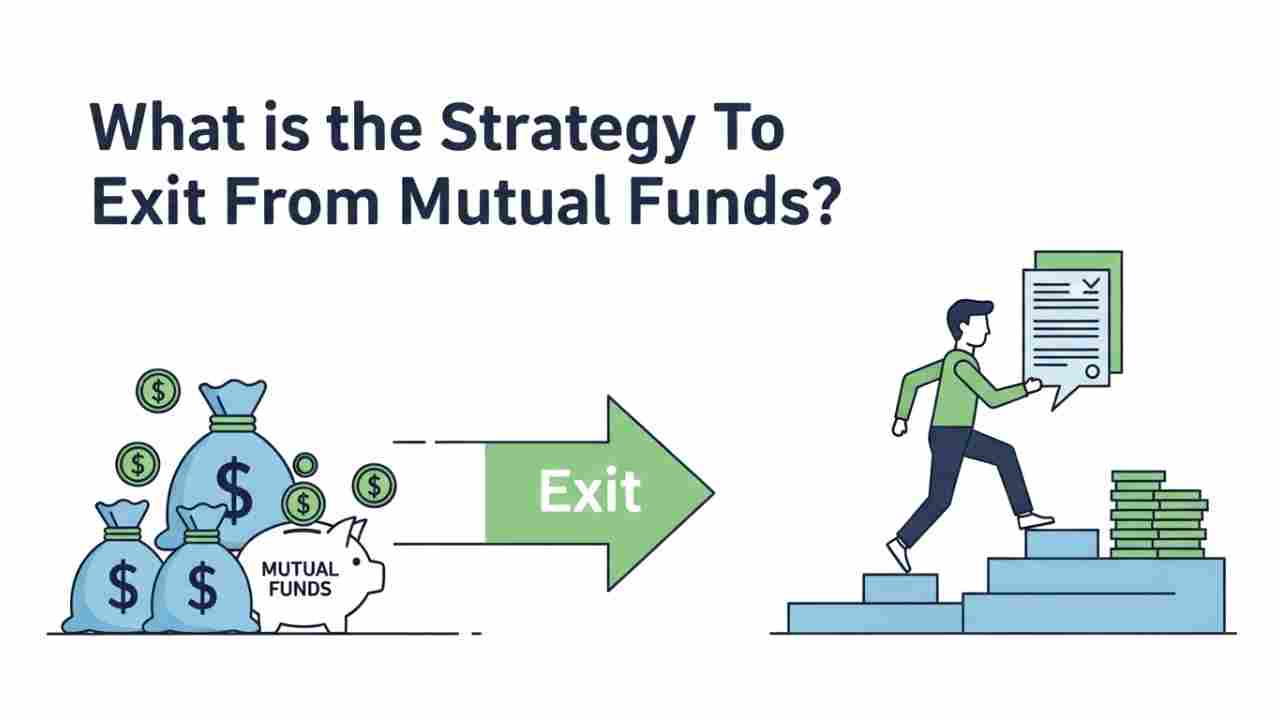
In this blog post, we will discuss an area that has received little attention—exiting mutual funds —and share some insights on various strategies.
Why is an Exit Strategy Important?
An exit strategy helps you:
- Lock in profits when your financial goals are achieved.
- Minimize losses when a fund is underperforming consistently.
- Adapt to changing life circumstances like retirement, marriage, or children’s education.
- Manage risk during market volatility.
- Reallocate funds when your risk tolerance or investment needs change.
Without a proper exit plan, you might exit too early and miss out on gains, or stay invested too long and suffer unnecessary losses.

Situations Where You Should Consider Exiting a Mutual Fund
Let’s explore common situations where exiting a mutual fund makes sense, along with the best strategies for each.
1. Achieving Financial Goals and Profit Booking
When you’ve successfully met your financial goals or are close to achieving them, it’s time to secure your gains and reduce risk.
What to do:
- Assess if you’ve met your target: Consider factors like your time horizon, expected returns, and current market conditions. If you’ve reached or exceeded your goal, it might be time to exit.
- Transition to stable funds: If you still have some time before you need the money, gradually shift from aggressive growth-oriented equity funds to more stable debt or hybrid funds.
- Set up a Systematic Withdrawal Plan (SWP): If you need regular income (for example, after retirement), set up an SWP to withdraw a fixed amount regularly while keeping the rest invested. This ensures steady cash flow without liquidating your entire investment.
- Use Systematic Transfer Plan (STP): If you want to shift money from one fund to another gradually, use STP. This allows you to systematically move a predetermined amount from one scheme to another, helping you transition smoothly.
- Diversify into other assets: Consider moving some funds to fixed deposits, bonds, or real estate to diversify your portfolio and reduce overall risk.
Example: If you invested for your child’s education goal and the corpus is now sufficient, gradually move from equity funds to debt funds as the goal date approaches.
2. Market Volatility and Risk Management
During periods of extreme market volatility or when a mutual fund faces significant risks, having an exit strategy helps protect your investments.
What to do:
- Evaluate the fund’s performance: Look at short-term, medium-term, and long-term returns to identify trends. One bad quarter doesn’t mean you should exit immediately.
- Compare with peers and benchmarks: Check how your fund is performing compared to similar funds in the category and relevant benchmark indices. If it consistently lags behind, that’s a red flag.
- Exit if consistent underperformance: If a fund underperforms consistently over multiple periods (say, 2-3 years), consider exiting and moving to a better-performing fund.
- Research alternatives: Before exiting, research and identify funds with similar investment objectives but better track records to redirect your money.
Important: Don’t panic and exit during short-term market corrections. Market volatility is normal. Exit only if the fund itself is fundamentally weak, not just because the market is down.
3. Changing Investment Needs or Risk Tolerance
Your financial situation and risk appetite evolve over time due to life events like marriage, childbirth, job changes, or approaching retirement. Your mutual fund portfolio should evolve too.
What to do:
- Reassess your circumstances: Review your current financial goals, investment timeframes, and ability to take risks.
- Review your portfolio: Check if your current mutual fund holdings still match your risk appetite and investment objectives.
- Reallocate if necessary: If your risk tolerance has decreased (for example, you’re nearing retirement), consider shifting from high-risk equity funds to low-risk debt or hybrid funds.
- Use STP for smooth transition: Instead of exiting abruptly, use STP to systematically transfer funds from one scheme to another, ensuring you don’t miss out on potential gains during the transition.
Example: A 30-year-old might invest 80% in equity funds. But at 55, approaching retirement, it makes sense to gradually reduce equity exposure to 40-50% and increase debt allocation.
4. Change in Fund Attributes or Mandate
Sometimes, a mutual fund may change its fundamental characteristics, such as:
- Investment style (from value investing to growth investing)
- Portfolio composition (from large-cap to mid-cap focus)
- Fund manager change
- Merger with another fund
If these changes don’t align with your original investment purpose, it’s time to reconsider.
What to do:
- Stay informed: Regularly read fund updates, disclosures, and prospectus changes sent by the fund house.
- Evaluate alignment: Check if the new attributes still match your investment goals and risk tolerance.
- Exit if misaligned: If the changes don’t suit your preferences or goals, exit the fund and look for alternatives that better fit your needs.
Example: If you invested in a large-cap fund for stability and it suddenly starts investing heavily in small-cap stocks (higher risk), it might no longer serve your purpose.
Exit Strategies and Tools You Can Use
Here are some practical tools to help you exit mutual funds smartly:
Systematic Withdrawal Plan (SWP)
Withdraw a fixed amount regularly while keeping the rest invested. Ideal for retirees needing regular income.
Systematic Transfer Plan (STP)
Gradually move money from one fund to another. Useful when transitioning from equity to debt or switching funds.
Lump Sum Redemption
Exit the entire investment at once. Use this when you’ve achieved your goal or need the full amount immediately.
Partial Redemption
Withdraw only a portion of your investment. Helpful when you need some money but want to keep the rest invested.
When NOT to Exit a Mutual Fund
- Short-term underperformance: Don’t exit after just 6 months of poor performance. Give the fund at least 2-3 years.
- Market corrections: Temporary market downturns are normal. Don’t exit in panic.
- Emotional decisions: Avoid selling based on fear or greed. Stick to your plan.
The Bottom Line
Just as Abhimanyu had to be aware of the exit route from the Chakravyuha, an investor investing in mutual funds also had to be aware of his exit strategy. In fact, the exit route is equally important as the entry route.
Remember:
- Exit when you’ve achieved your financial goals.
- Exit if a fund consistently underperforms over 2-3 years.
- Exit when your life circumstances or risk tolerance change.
- Exit if the fund’s fundamental attributes no longer match your goals.
To make smooth exits, you can use tools like SWP, STP, and partial redemption. This helps you take well-informed decisions and have a proper strategy of exit in place, in order to safeguard all the hard work done to earn the money as well as get maximum possible gains.
Learn More:
- 10 Debt Mutual Funds That Outperformed in the Last 1 Year with 10% to 24% Returns in 2025
- Blue-Chip Stocks vs. Penny Stocks
- Delivery vs Intraday Trading
- Difference in Expense Ratio Between Direct and Regular Mutual Funds
- Best Small-Cap Index Funds
Disclaimer: This blog is for educational purposes only. The securities/investments mentioned here are not recommendations. Please consult a financial advisor before making investment decisions.