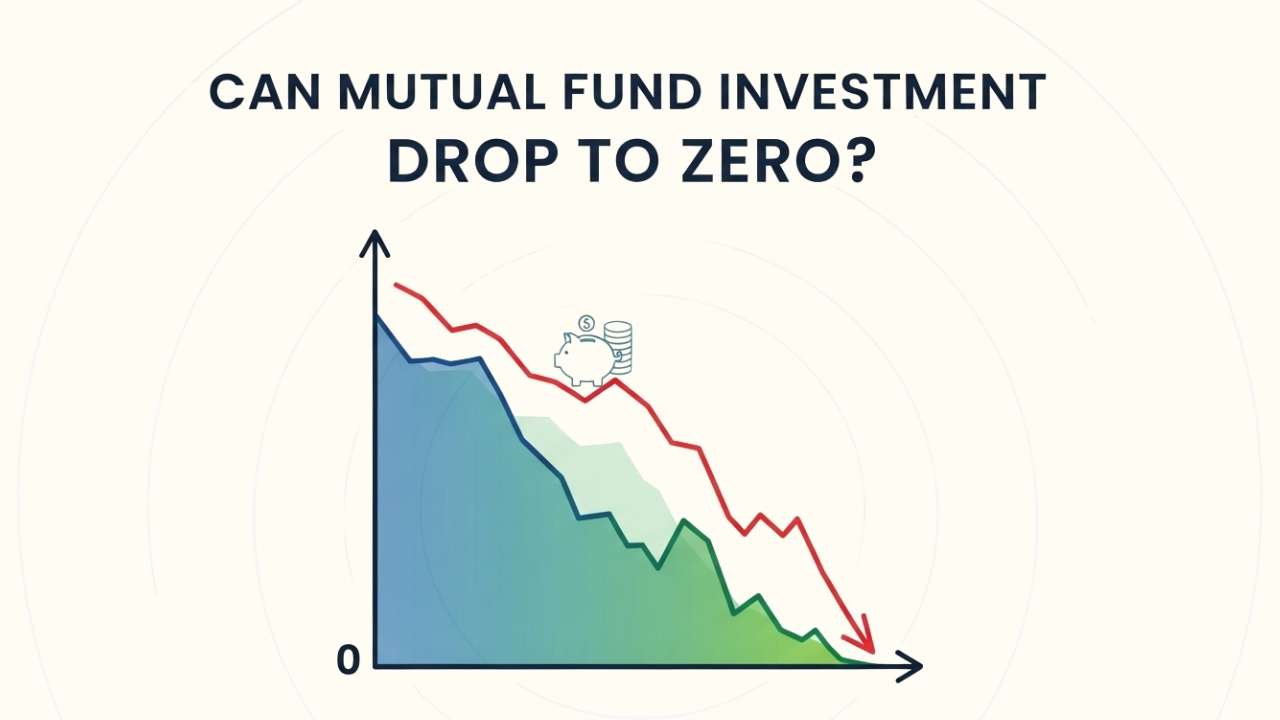

As an investor, it’s natural to worry about your mutual fund investments. The thought of waking up one day and finding your investment reduced to zero can be scary. But let’s break down this concern and understand the reality.
Can Your Mutual Fund Investment Drop to Zero?
Theoretically, any investment can lose value, but the chances of a mutual fund dropping to zero are extremely low. For a mutual fund to become zero, all the securities and assets it has invested in would have to lose all their value. This would mean every company in the fund’s portfolio has gone bankrupt and all bonds have defaulted, which is almost impossible unless there’s a complete economic collapse.
For example, if you invest in a small-cap equity fund, the value of the fund will only drop to zero if all the small-cap companies in the portfolio shut down and the bond investments also become worthless. This scenario is highly unlikely.

What If Your Investment Reduces to 25% of Its Value?
A more realistic scenario is a significant drop in value, such as your investment reducing to 25% of its original value. This can happen during a market crash, especially if your portfolio lacks diversification. Here’s how to handle such a situation:
1. Don’t Sell in Panic
If your investment drops sharply, avoid selling in panic. Selling locks in your losses, and you miss out on potential recovery. Historically, markets have always bounced back from crises. Holding on to your investments can help you recover and even make profits in the long run.
2. Analyze Your Investments
Take a close look at your portfolio. Assess the fundamentals of the securities you’ve invested in. If the underlying companies are strong, they are likely to recover. Consider seeking advice from an investment manager to help you decide which investments to hold and which to sell.
3. Remember Your Investment Goals
Keep your long-term goals in mind. Equity mutual funds are best suited for long-term investors. If your goals are more than 5-10 years away, stick to your plan if the fundamentals of your investments are strong.

4. Markets Will Always Be Volatile
Market volatility is normal. While downturns can be stressful, markets have always recovered from past crises. Staying invested during tough times can lead to better returns when the market rebounds.
5. Diversify Your Portfolio
If your portfolio is heavily affected by a market crash, consider diversifying. Invest in assets that are not correlated with your current holdings. This reduces overall risk and increases your chances of recovering losses.

Final Thoughts
While it’s possible for an investment to lose value, the chances of a mutual fund dropping to zero are negligible. Focus on your long-term goals, avoid panic selling, and diversify your portfolio to reduce risks. Remember, markets have always recovered from downturns, and staying invested can lead to better returns in the long run.
Sit down with your investments and think carefully before making any decisions.
Learn More: